Rice Purity Test for 18 Year Olds: Average Score, Safety, and What It Means
The short answer: an 18-year-old can take the Rice Purity Test as a private reflection activity, but the score should never become proof of adulthood, college readiness, dating value, or moral worth. A high score is still normal at 18, a lower score is not a failure, and the healthiest interpretation depends on consent, privacy, independence, and the real context behind each checked item.
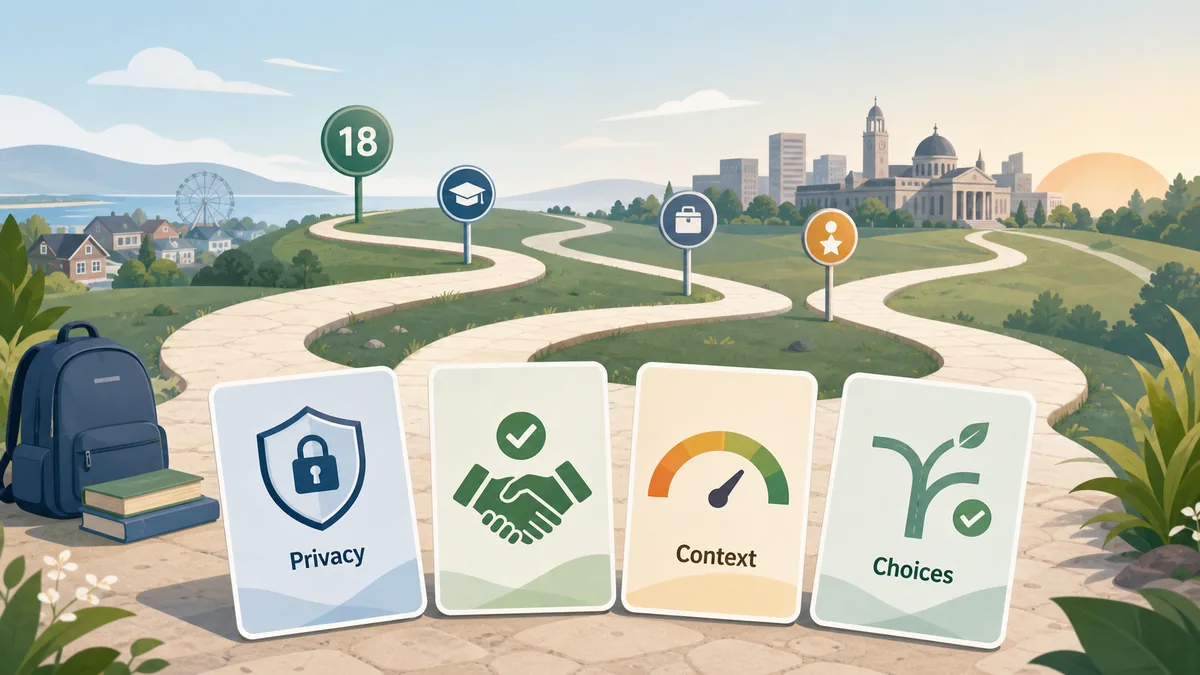
Quick Answer: Should 18-Year-Olds Take the Rice Purity Test?
The Rice Purity Test for 18 year olds is usually searched by students who are graduating high school, starting college, entering work, dating more independently, or comparing scores with friends. At 18, the test can be useful as a private reflection checklist because most readers can understand the mature topics more clearly than younger teens.
The important boundary is that "old enough to take it" does not mean "required to share it." The standard test asks about relationships, substances, parties, rule-breaking, and sexual experience. Your answers can be personal even if you are legally an adult in many places. You can take the test, skip items, close the page, or keep your result private.
What Is a Normal Rice Purity Score at 18?
There is no official universal average Rice Purity score for 18 year olds. The test is viral, self-reported, and heavily shaped by who chooses to post results online. Searchers often want one exact number, but a range is more honest. For many 18-year-olds, a score somewhere in the 70 to 90 range can be completely ordinary, especially when friend groups, school culture, dating experience, and family rules vary widely.
Scores above 90 are still normal at 18 and often mean very few checklist items apply. Scores in the 70s or 80s may reflect more dating, social, or party experience. Scores below 70 are not automatically bad, but they deserve context: which categories apply, whether the experiences were consensual, and whether anything involved pressure, risk, or regret.
| Score range | Plain-English meaning for 18-year-olds | How to read it safely |
|---|---|---|
| 90-100 | Very few listed experiences apply. | Normal at 18. It does not mean you are immature, sheltered, or unready for adult life. |
| 80-89 | High score with some common late-teen experiences. | Often fits readers with some dating or social exposure while keeping many boundaries. |
| 70-79 | Moderate-high score with a wider set of experiences. | Read in context: independence, consent, friend group, and comfort level matter more than comparison. |
| 60-69 | More listed experiences than many 18-year-olds report. | Not a verdict. Reflect on safety, pressure, substance use, and whether any choices felt rushed. |
| Below 60 | A broad set of checklist items applies. | The number is still not a character score. If any experience involved coercion, harm, or distress, reach out to a trusted person or support resource. |
18 vs 17, Teens, and College Freshmen
Eighteen is a bridge age. Some 18-year-olds are still in high school. Others are already in college, working full time, dating more independently, or living away from home. That is why this page sits between the 17-year-old guide, the teen guide, and the broader average Rice Purity score page.
| Page / life stage | Expected pattern | Best next step |
|---|---|---|
| 16-year-olds | Scores begin to vary more as dating, parties, and online culture differ. | Focus on privacy and age-appropriate boundaries. |
| 17-year-olds | Scores spread further as readers approach college, work, or adulthood. | Use the score as private context, not a social dare. |
| 18-year-olds | Scores may shift because independence, dating, travel, and college social life often increase. | Interpret with consent, privacy, substance safety, and adult responsibility in mind. |
| Average score by age | Best page for broad score benchmarking across age groups. | Use it when your main question is the number, not the age-18 transition. |
| Score meaning guide | Best page for understanding a specific score after taking the test. | Use it when you already have a score and want the checked-items formula. |
How to Interpret an 18-Year-Old's Score Without Turning It Into a Competition
The Rice Purity score is a checklist result. It does not measure maturity, kindness, intelligence, attractiveness, confidence, relationship skill, or readiness for college. A high score usually means fewer listed experiences apply so far. A lower score means more items apply. Neither result tells you whether those experiences were safe, wanted, respectful, legal in your location, or emotionally healthy.
At 18, the pressure can sound different from younger teen pressure. It may show up as "everyone does this in college," "you are too innocent," "your score is too low," or "prove you are not boring." Those are social judgments, not useful interpretations. The better question is whether your choices match your boundaries and whether the situations behind the score involved clear consent and respect.
If your main concern is the number itself, use our Rice Purity Test score meaning guide or score chart. This article keeps the focus on the age-18 transition so it does not duplicate the broader score pages.
Privacy, Consent, and Peer Pressure Rules for 18-Year-Olds
At 18, sharing a score may feel harmless because friends are older, but the privacy risk is still real. Screenshots, group chats, roommate conversations, dating profiles, and social posts can turn a private quiz into a lasting label. You can choose not to share, even with close friends, partners, classmates, or campus groups.
Safer use
- You take it voluntarily and privately.
- You understand the score is not proof of maturity.
- You avoid screenshots, public score posts, and dating judgments.
- You use the result to reflect on boundaries, not to change them for others.
Red flags
- Someone demands your score before dating or joining a group.
- Friends rank people by high or low scores.
- You feel pushed to lower your score in real life.
- A checked item reminds you of pressure, coercion, or regret.
For broader young-adult safety and campus consent education, readers can review RAINN's consent guide. For background on the test's campus origins, Rice University archival materials preserve purity-test documents, including records in the Rice archives.
College Transition: Why the Score Can Change Quickly After 18
Many people search this topic right before or during the first college year. That timing matters. A new campus or work environment can bring more independence, new friend groups, parties, dating apps, travel, and less day-to-day family oversight. A score may change quickly, but that does not mean it should change because of pressure.
The healthiest transition is not about lowering a score. It is about making choices you can explain to yourself later without shame, panic, or confusion. If a situation involves alcohol, substances, secrecy, age-gap pressure, unclear consent, or fear of losing friends, slow down. The test can be a reminder to think before acting, not a checklist to complete.
| Transition moment | Common pressure | Better boundary |
|---|---|---|
| First college parties | "Everyone drinks or hooks up." | Plan your exit, stay with trusted people, and do not use a score as a dare. |
| Dating apps or new relationships | "Your score tells me what you are like." | Your score is private; boundaries matter more than a number. |
| Roommates or group chats | "Drop your score in the chat." | Share only if you want to, and never pressure someone else to share. |
| Feeling behind | "I need more experiences before college." | You do not need experiences for a checklist. Move at your own pace. |
Parents, Guardians, and Mentors: How to Talk About the Test at 18
If an 18-year-old asks about the Rice Purity Test, the conversation should respect independence while still offering support. The best response is not interrogation. It is calm context: the score is private, the test is not scientific, and no checklist defines adulthood.
Ask what prompted the question. Was it curiosity, college anxiety, peer comparison, dating pressure, or a specific item that felt confusing? Those situations call for different support. Curiosity may need simple explanation. Peer pressure may need a script for saying no. Worry about a past experience may need privacy, reassurance, and a trusted support path.
A useful script: "You do not have to tell me your score. I just want you to know that a checklist does not define you. If any item connects to something that felt unsafe, pressured, or confusing, you can talk to me or another trusted person without having to turn it into a score conversation."
Should an 18-Year-Old Use the Teen Version or the Official Test?
If you want a softer framing, start with the teen-focused Rice Purity Test page because it emphasizes privacy, boundaries, and safe interpretation. If you want the standard 100-question experience, use the official Rice Purity Test, but remember that "official" does not mean scientific, diagnostic, or required.
This article does not replace the teen page, the official test, or the average-score guide. It answers one narrower question: how to understand the Rice Purity Test at 18, especially during the transition from high school into college, work, dating independence, and adult responsibility.
Frequently Asked Questions
Final Takeaway
The best way to read the Rice Purity Test at 18 is with context. A high score is normal. A lower score is not a judgment. The number becomes useful only when paired with consent, privacy, emotional readiness, and honest boundaries.
If you want to take the test, choose the page that fits your comfort level. If you already have a number, compare it gently with score guides instead of treating it like a scoreboard.
Take the Official Test Compare Average Scores