Short answer: rice purity test by country is best understood as a comparison of local versions and answer context, not a league table of national innocence. The familiar checklist travels easily online, but its phrases, examples, question count, age mix, and privacy expectations can change as it moves between communities.
On this page
What does Rice Purity Test by Country mean?
People use the phrase when they want to know whether a Rice Purity Test works differently in the United States, Europe, Asia, Finland, or another local setting. Sometimes they want a translated checklist. Sometimes they want an explanation of why the same prompt feels normal in one place and unfamiliar in another. Those are related searches, but neither one automatically supplies a reliable national average.
The original format is a self-graded list of yes-or-no experiences. Its score is a convenient summary of checked items, not a validated survey of a population. A page that collects anonymous results may have a useful snapshot of its own visitors, yet it still reflects who found that page, who felt comfortable answering, and which version they saw. Age, language, internet access, and willingness to disclose can shift the result before culture enters the discussion.
That is why this guide treats rice purity test by country as a version-and-context question. We can compare wording and boundaries honestly. We cannot infer that one country is "purer" from a table with unknown sampling.
How the international Rice Purity Test changed over time
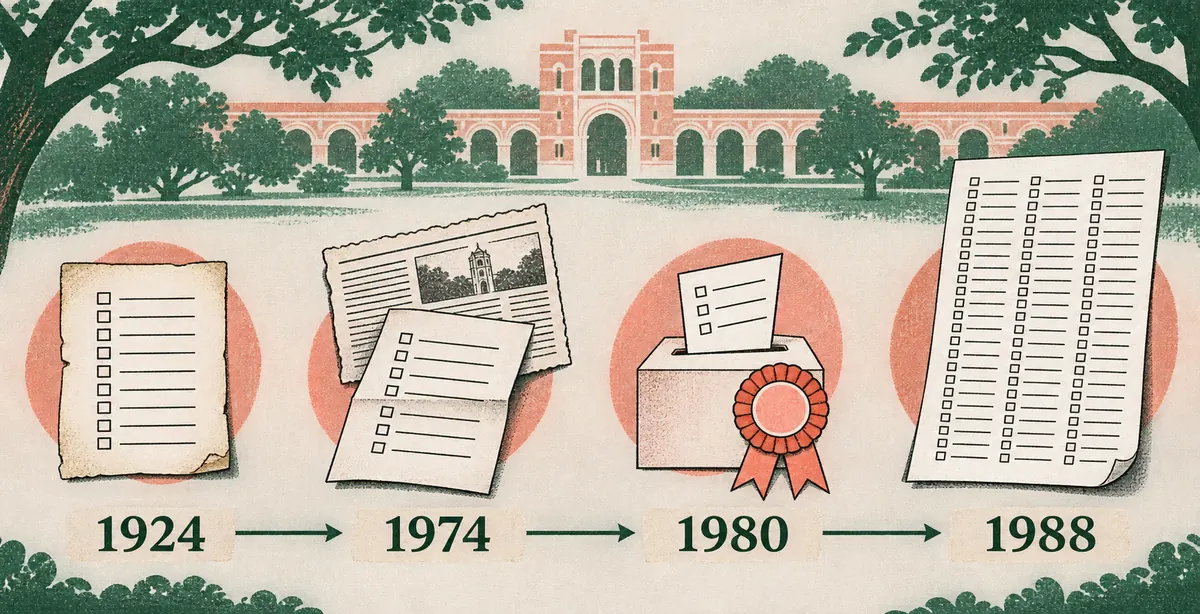
A global comparison starts with history. Public accounts trace early purity-test forms through student newspapers and campus communities, where the questions reflected the concerns of a particular time. The Rice Thresher record is one documented thread, not proof that every later online list is identical. As the format moved between universities and then onto the web, editors added, removed, translated, and reordered prompts.
That evolution creates three layers of variation:
- Historical variation: a 1920s or 1980s list may mention social rules that no longer make sense to a current reader.
- Platform variation: a modern site may keep 100 items but change the order, replace a phrase, add statistics, or use a different score formula.
- Cultural variation: a translated version may explain an idiom, adapt an example, or keep a local reference that is invisible to outsiders.
These layers matter more than a flag icon beside a title. Two pages can both say "international Rice Purity Test" while asking different questions. Before comparing results, record the question count, wording, answer options, and whether each checked item subtracts one point.
Which cultural factors can change a question?
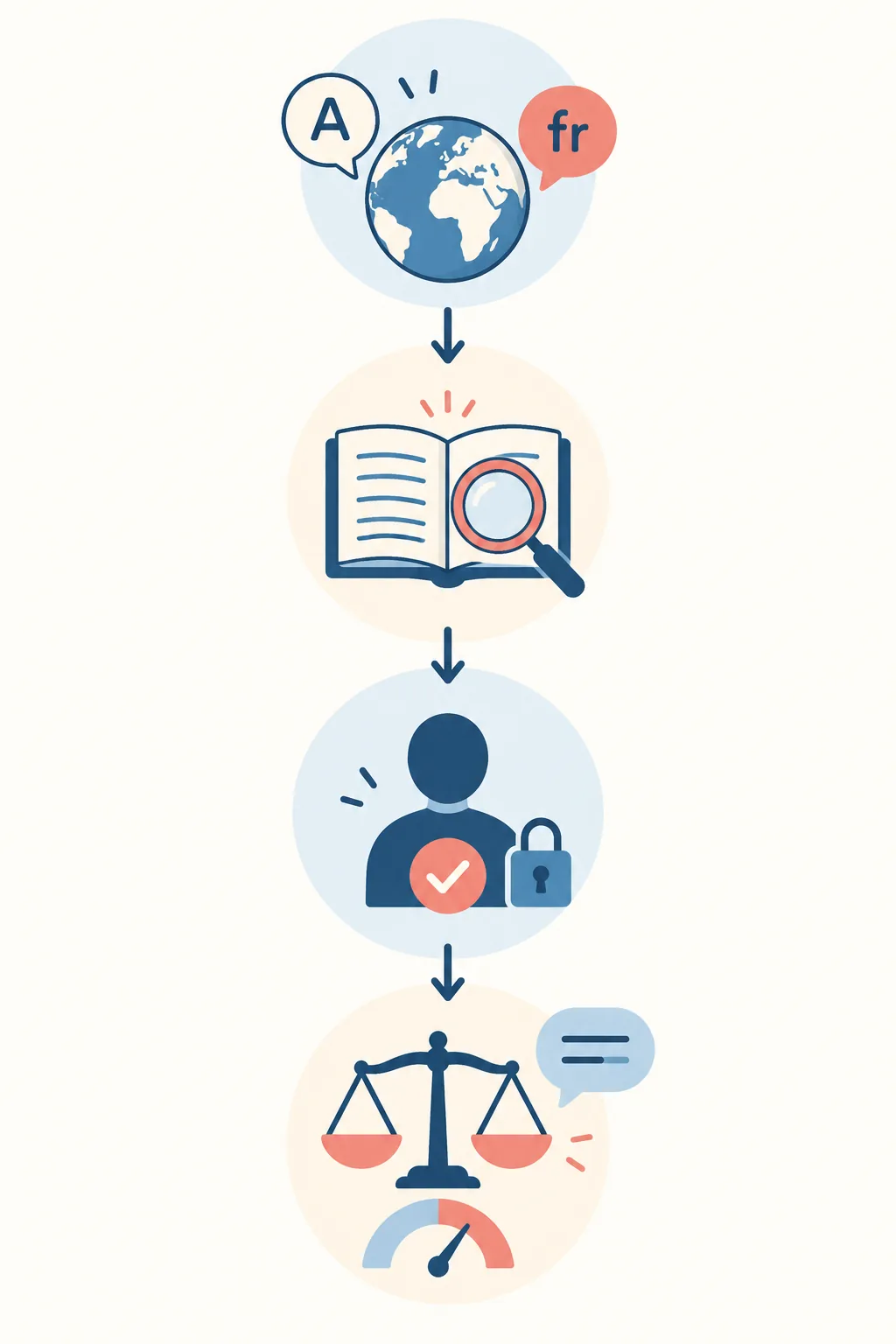
A thoughtful international version does not claim that every person in a country shares one experience. It explains where a prompt may be interpreted differently and lets the reader answer for themselves. The most common differences are linguistic, legal, social, and methodological.
| Factor | What may change | Fair comparison check |
|---|---|---|
| Idioms and slang | "Made out," "hooked up," or a playful phrase may have no exact local equivalent. | Read a plain-language definition before answering; do not compare a translated label alone. |
| Legal references | Questions about drinking, driving, age, or public behavior can point to different rules. | Separate what the question asks from what is legal in your location today. |
| Dating and family norms | Privacy, relationships, and school life are organized differently across communities. | Describe the behavior, not a stereotype about people from that country. |
| Consent language | A blunt translation can hide the difference between chosen contact and pressure. | Skip or ask for clarification when the wording does not make consent clear. |
| Sampling and disclosure | Anonymous online visitors are not a random national sample. | Keep the source, date, question set, and audience with any number you share. |
For example, a Finnish reader searching for rice purity test suomi may want Finnish wording, not a claim that Finland has one typical score. A French reader may need a cultural note for an idiom, while a Canadian reader may notice a different legal reference. Those are useful editorial adaptations; they are not evidence that a nation has a fixed level of innocence.
A practical regional comparison
The following map is a reading framework rather than a score ranking. It tells you what to inspect when a version is marketed to a broad region. Within every group there are differences by age, city, religion, family, education, identity, and personal boundaries.
North America and Oceania
English-language versions often preserve familiar campus slang, references to parties, and a 100-item layout. That does not mean every reader shares a campus experience. Check whether the page is using a Rice Thresher wording, a modernized clone, or a themed remix before comparing it with another English page.
Western and Northern Europe
Translations may need to explain dating vocabulary, alcohol references, and public behavior without assuming one European norm. A French adaptation can be a useful case study, but it should not be treated as a proxy for Finland, Germany, or the United Kingdom. Local language clarity is the relevant output.
East and Southeast Asia
Readers may encounter a translated checklist, a fandom version, or a page that keeps English terms in parentheses. Family expectations, school pressure, and privacy concerns can shape who answers and what they disclose, but an editor should describe those as possible contexts rather than universal traits.
South Asia, the Middle East, and other regions
When public disclosure carries a higher personal cost, online samples may be especially selective. A visible table can therefore undercount experiences or overrepresent people who are comfortable with the format. The honest conclusion is uncertainty, not a confident regional average.
How to compare two country versions fairly
- Save the exact URL and date. Online lists change. A title and flag are not enough to identify a version.
- Count the questions. A 100-item list and a 50-item list cannot share the same score scale without adjustment.
- Read the scoring rule. Confirm whether yes answers reduce the score, whether skipped items count, and whether any items are weighted.
- Check translation notes. Look for definitions of slang, local references, age wording, and consent. If a term is unclear, leave it unanswered.
- Keep sample limits visible. If a page publishes averages, ask who answered, how many people participated, and whether the data was collected consistently.
This process produces a better comparison than copying a list of country numbers. It also protects readers from turning a personal score into a public identity label.
How to read a score in a global context
Start with the version, then the questions that were checked. A score of 80 on one 100-question list is not automatically equivalent to 80 on a shorter list or a translation with different examples. The number can help you reflect on what you understood and chose to report, but it cannot tell you whether your life is normal or whether another culture is better.
For the score math itself, use our average score guide and score ranges explanation as separate context. If you want to see how one language adaptation handles wording, read the French version guide. The sourced history explains why the format has never been a single, universally controlled survey.
Rice Purity Test by Country FAQ
Is there an official Rice Purity Test by country?
No. There are documented historical versions and many online adaptations, but no single authority publishes one country-by-country standard. Compare the question list and scoring rule before calling a version official.
Can I compare my score with another country?
Only as a conversation prompt. The exact questions, translation, audience, age mix, and willingness to disclose all affect a self-reported score. A shared 100-question label does not make two samples nationally representative.
Why do international versions use different wording?
Slang, idioms, legal references, and consent terms do not map one-to-one between languages. Good pages explain the intended behavior instead of forcing a literal phrase that sounds harsher or more explicit.
Does a higher score mean a country is more pure?
No. A higher score generally means fewer checked items on that particular list. It is not a ranking of morality, maturity, safety, or national character.
What if a translated question is unclear?
Read the glossary or explanation, and leave it unanswered if the meaning remains uncertain. Do not guess and do not let someone else answer for you.
Key takeaway
A responsible rice purity test by country comparison explains version history, translation choices, cultural context, sampling limits, and privacy. It does not manufacture a global leaderboard. Use the language that makes each question clear, keep your answers private, and treat the result as a personal reflection.
Sources and further reading
- Purity test history and format overview (accessed November 16, 2026).
- Our sourced Rice Purity Test history guide for documented milestones and limits of the historical record.