
Short answer: a Rice Purity Test French version is a language and context adaptation of the familiar checklist, not a clinical test or a universal measure of character. The questions can be translated into French, but idioms, age references, consent language, and privacy expectations still need a thoughtful explanation.
On this page
What does Rice Purity Test French mean?
The phrase rice purity test french usually describes one of two things: a French-language copy of the classic checklist, or a French cultural version that rewrites examples so they make sense to local readers. Searchers may also use french purity test or test de purete when they simply want the same self-scored activity in a more comfortable language.
There is no single authority that controls every online translation. Different pages may keep the original order, shorten a phrase, replace an idiom, or add a note about age and consent. That is why two French versions can produce different results even when both say they have 100 questions. Treat the page title as a description of the language, not proof that it is an official national survey.
A useful translation keeps the action of each question clear. It should explain unfamiliar slang in neutral French, avoid turning a joke into a judgment, and make it obvious whether a question asks about seeing, doing, agreeing, or being pressured. Those small choices matter more than a literal word-for-word translation.
What stays the same as the classic test?
The French version works best when readers can recognize the same broad structure as the English checklist. The score is still a count of unchecked experiences in a 0 to 100 format on this site's version. Each yes answer removes one point; each no or unanswered item leaves that point in the score. That math is simple, but the meaning remains personal.
| Element | What remains familiar | What to check |
|---|---|---|
| Question count | 100 prompts in a numbered checklist. | Some sites publish shorter or expanded lists, so compare the page before comparing scores. |
| Score range | A higher number means fewer checked experiences on this scoring model. | It is not a grade, diagnosis, or ranking of a person's worth. |
| Self-report | The participant decides which answers are true. | Never guess for someone else or answer to impress a group. |
| Purpose | Conversation, curiosity, and private reflection. | It is not validated psychological measurement. |
What can change in a French adaptation?
Idioms and everyday language
English phrases such as “made out,” “hooked up,” or “danced without leaving room for Jesus” do not have one perfect French equivalent. A careful page gives a short explanation instead of forcing a slang word that sounds older, harsher, or more explicit than the original. When a phrase has more than one meaning, the safer choice is to show the intended context beside the translation.
Age and social context
References to school, parties, driving, or drinking can feel different across French-speaking communities. France, Quebec, Belgium, Switzerland, and other francophone regions do not share every legal rule or everyday custom. An educational page should therefore avoid claiming that one answer pattern represents all French readers. It can say what the question asks and invite the reader to apply their own local context.
Consent and tone
Some original prompts are blunt or playful. Translation should not remove the difference between a consensual experience and unwanted contact. If a French wording feels ambiguous, read the explanation and choose “not sure” rather than forcing a yes. A lower score is never a reason to shame someone, and a higher score is never permission to pressure someone.
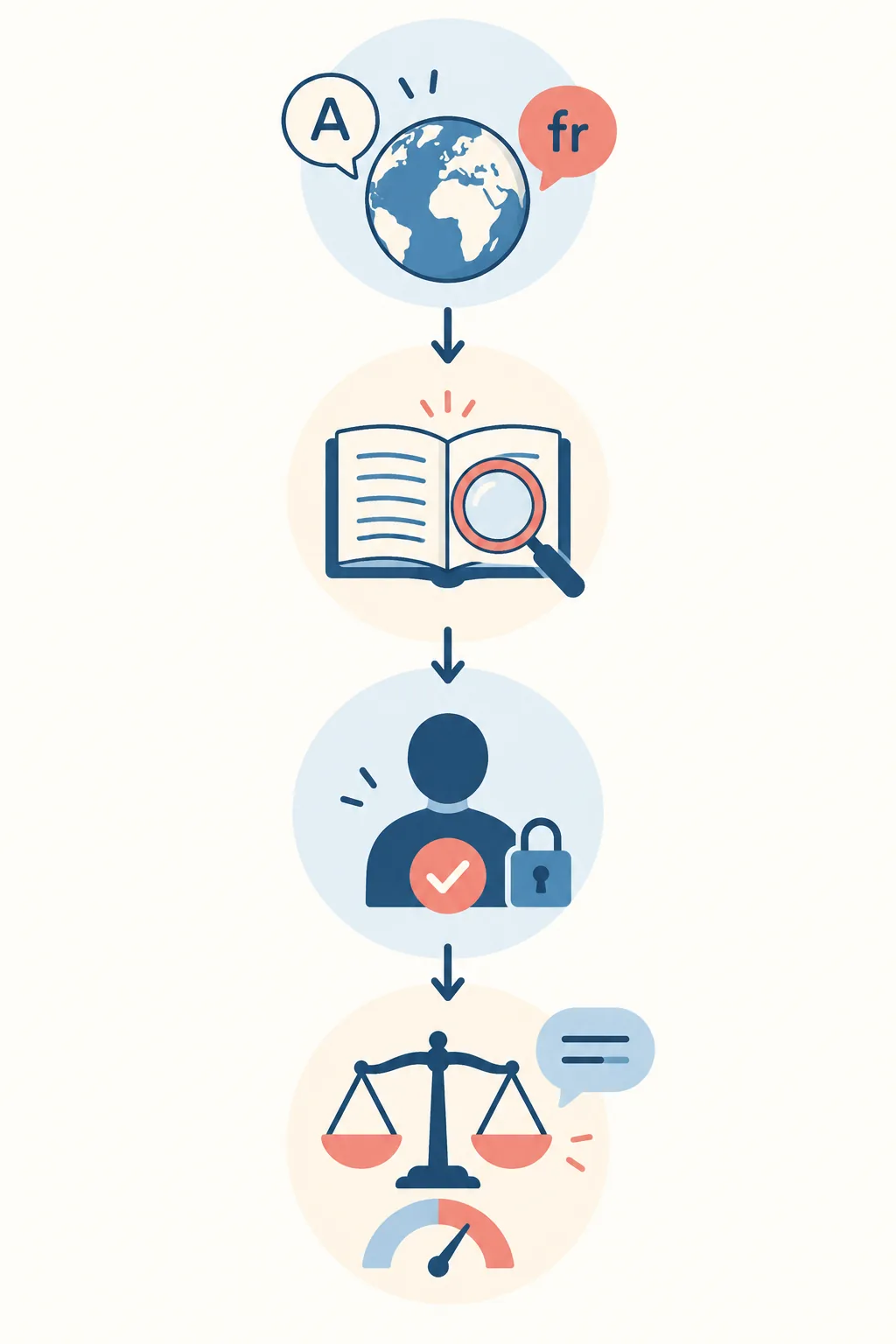
How to take a Rice Purity Test in French
- Choose the language you understand best. If you think in French, use a French explanation for terms even if the main page is bilingual. You should never answer a question you cannot define.
- Check the version before starting. Confirm the number of questions, the score formula, and whether the page is a translation, a themed remix, or an age-specific list. A score from one version is not automatically comparable with another.
- Answer alone and at your own pace. A private browser session is safer than a public group form. It is fine to pause, skip a sensitive prompt, or close the page.
- Read the result as context, not a verdict. Write down the question count and date if you want to revisit the result. Do not post a screenshot that exposes your answers or someone else's.
If you are learning French, you can use the English question beside a French glossary, but avoid treating the activity as a vocabulary exam. The goal is accurate self-reflection, not a perfect translation score.
Useful French wording for common terms
These examples are short explanations, not a replacement for the exact wording on a particular page. They show why context is more useful than a literal dictionary swap.
| English idea | Plain French wording | Why context matters |
|---|---|---|
| To make out | Embrasser quelqu'un de maniere intime | The phrase can mean more than a quick kiss, so the explanation should define the intended level of intimacy. |
| To be fondled | Recevoir des caresses intimes | Use a neutral phrase and keep consent visible; do not imply that every touch was wanted. |
| To go streaking | Courir nu en public | The public setting is part of the meaning, not just the absence of clothing. |
| To kiss horizontally | S'embrasser en etant allonge | The wording describes position and intimacy; it does not automatically describe sex. |
French readers may also see questionnaire de purete or test d'innocence. These labels are useful search terms, but they can suggest a moral judgment. On this site, “purity” is the name of the format, not a claim that one person is better than another.
How should you read a French Rice Purity score?
Start with the version and the question count, then look at the individual prompts that shaped the number. A score of 80 on a 100-item list means something different from 80 on a 120-item list. It also says nothing about language, nationality, maturity, or health. People often search for an average Rice Purity score, but online samples are self-selected and cannot define a correct French average.
Instead of asking whether a score is “good” or “bad,” ask whether the answers were understood, voluntary, and safe to share. If a question brings up an upsetting memory or a current safety concern, stop the quiz and talk with a trusted person or qualified local support service. The number can wait.
Privacy and consent for French readers
A language version should make privacy easier, not create a new reason to overshare. Before starting, check whether the page stores answers, uses analytics, or simply calculates a score in the browser. Never enter a real name, phone number, school, or friend's details into an answer field. If a group wants to compare results, share only a number when everyone agrees, and remember that “pass” is always a valid response.
For teens, a French-language explanation can help reduce misunderstanding, but it is not a substitute for an age-appropriate conversation with a trusted adult. Adults should avoid turning the score into a test of honesty. The best discussion is about boundaries, consent, and how to find reliable information when a prompt is confusing.
Rice Purity Test French FAQ
Is there one official French Rice Purity Test?
No single translation controls every online version. Compare the question count, wording, score formula, and privacy notes before calling a page official.
Does “test de purete” mean the score is a moral judgment?
No. It is a common label for the format. The score records checked items on one self-report list; it does not measure a person's value or morality.
Can I use an English score with a French version?
Only with caution. If both pages use the same questions and formula, the numbers may be comparable. If wording or question count changes, treat the results as separate.
What if a French question is unclear?
Read the surrounding explanation, check another trusted glossary, or leave it unanswered. Guessing can make the score look precise when the prompt was not understood.
Where can I take the standard test?
You can use the standard online Rice Purity Test, then return to this guide when you need help comparing language and context.
Key takeaway
A Rice Purity Test French version is most useful when it explains its boundaries: which phrases were translated, which examples were adapted, how the score is calculated, and how privacy is handled. Use the French wording that helps you understand the question, keep your answers private, and treat the final number as a moment of reflection rather than a label.