Gaming Rice Purity Test: Valorant, Overwatch & More
Compare game-themed questions, understand what the score can and cannot say, and choose a version that stays fun without turning private answers into peer pressure.
If you searched for a gaming rice purity test, you are probably looking for the familiar checklist format with questions rewritten around video games, player habits, fandom, and online memories. The short answer is that a gaming version is a themed self-reflection quiz, not an official skill test. It can be built around one game such as Valorant or Overwatch, or it can mix several gaming communities into one playful list.
Quick answer: what is a gaming rice purity test?
A gaming rice purity test is a fan-made or community-style checklist about experiences such as trying ranked play, joining voice chat, collecting skins, watching esports, arguing over a main, or staying up for one more match. The exact questions depend on the version. Your score reflects the boxes you checked on that list; it does not grade your skill, personality, maturity, or worth.
What does a gaming purity test measure?
A gaming purity test usually measures familiarity and participation, not purity in a literal sense. Its questions turn shared player moments into a simple yes-or-no format. One item may ask whether you have played a competitive mode; another may ask whether you have watched a tournament, bought a cosmetic, muted a teammate, joined a clan, or tried a game because a friend recommended it.
The appeal is recognition: a player sees familiar memories such as a first clutch, a late-night session, a favorite character, or a community joke. That makes a gaming purity test closer to a fandom checklist or conversation starter than a psychological assessment.
Because these lists are usually fan-made, there is no universal question set. Before comparing scores, check the question count, scoring rule, and whether the list covers one title, one genre, or gaming culture in general.
How a gaming purity test differs from the classic Rice Purity Test
The classic Rice Purity Test asks about a broad range of life experiences. A gaming version borrows the structure—usually a checklist and a final count—but replaces the subject matter with game-related behavior. The difference is important because the same score number has no shared meaning across unrelated versions.
| Feature | Classic Rice Purity Test | Gaming purity test |
|---|---|---|
| Main subject | General life experiences and personal history. | Games, player habits, fandom, teams, and online culture. |
| Typical use | Private self-reflection or a conversation prompt. | Fandom recognition, group humor, or comparing game memories. |
| Score meaning | Depends on the exact question list and scoring rule. | Shows checked gaming items on that version, not skill or rank. |
| Best comparison | Compare wording only within the same version. | Compare with friends only when the list and rules match. |
A high gaming score may simply mean that someone has tried more modes and followed more community events, while a low score may mean they play one favorite game casually. Neither result is automatically better.
Valorant vs Overwatch: how the themes can change
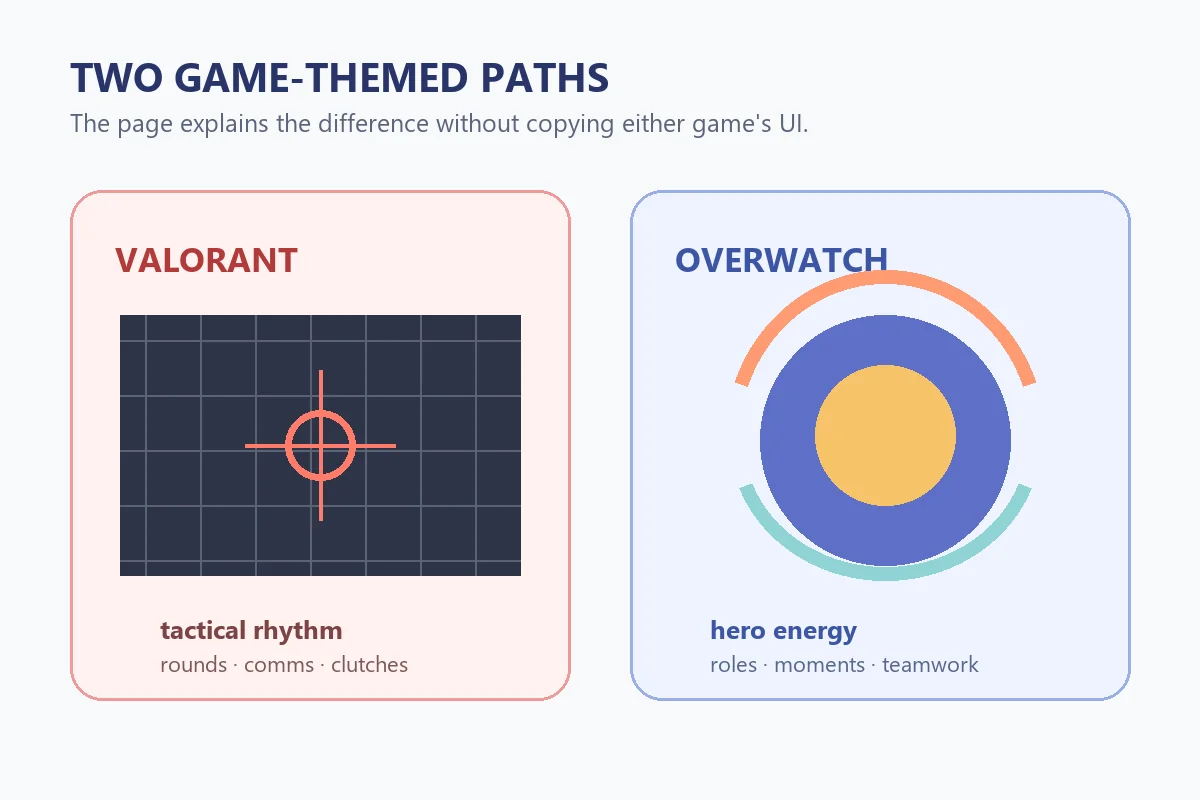
A Valorant rice purity test naturally leans toward tactical, round-based memories. Questions may reference agents, ranked queues, economy decisions, clutch moments, skins, team comms, or watching competitive play. Our Valorant Rice Purity Test is the site's existing interactive destination for that game-specific experience.
An Overwatch rice purity test can use a different vocabulary. A community list might focus on heroes, roles, map memories, team fights, changing mains, support or tank habits, highlight moments, seasonal events, and the social rhythm of a team-based match. The goal is not to decide which game is harder; it is to make the checklist recognizable to people who play that game.
Keeping both themes on one page helps readers decide what they want. A dedicated Overwatch page could be useful later if its question set and search intent become distinct enough; for now, it works as one section inside the wider gaming purity test topic.
| Theme | Question flavor | Good fit for readers who... |
|---|---|---|
| Valorant | Agents, rounds, ranked habits, comms, clutches, and cosmetics. | Want a tactical-shooter checklist with familiar competitive moments. |
| Overwatch | Heroes, roles, maps, team fights, mains, and seasonal memories. | Want a hero-based team-game checklist with social and role language. |
| Mixed gaming | Genres, platforms, online habits, fandom, and shared player culture. | Play several games or want a group list that does not favor one title. |
Common gaming purity test question types
Strong gaming test questions are specific enough to feel familiar but broad enough that a reader can answer without needing a long explanation. The following categories cover the moments most themed lists try to capture.
Play habits and first experiences
These questions ask whether you have tried a genre, played on a platform, finished a campaign, joined a multiplayer lobby, or returned after a long break. They are easy entry points because almost every player has a few “firsts” to remember.
Competitive and team moments
Ranked queues, overtime, last-second wins, losing streaks, callouts, and teammate arguments belong here. Good wording describes a recognizable situation without turning normal frustration into a moral judgment.
Characters, cosmetics, and fandom
Game-themed versions may ask about a main, a favorite skin, collecting items, watching a trailer, following updates, or choosing a character because of the community. These questions feel personal without requiring private real-world information.
Online culture and social boundaries
Voice chat, clans, streaming, fan art, esports, and sharing clips can all appear in a video game purity test. A responsible list should also respect mute, block, and privacy settings: no one owes a group a screenshot or an explanation.
How to choose and take a gaming rice purity test
If you want to try one, choose the version based on the experience you want—not on a promise that one score is more impressive. This simple process keeps the result easier to understand:
- Match the theme to your games. Pick Valorant for tactical-shooter references, Overwatch for hero-and-role language, or a mixed list if your group plays different titles.
- Read the rules before answering. Check how many items are included, whether a yes answer subtracts a point, and whether the page uses a custom score label.
- Answer from memory, not pressure. A friend may remember a match differently, and that is fine. Skip an item if the wording is unclear or if you do not want to revisit the memory.
- Keep the result in proportion. Treat the number as a playful summary of the list, not proof of skill, dedication, or status in a gaming community.
- Share selectively. It is okay to share only the number, share nothing, or close the page. Never ask someone to reveal a personal answer as the price of joining a group activity.
A themed checklist still needs clear boundaries
Some fan-made lists mix harmless gaming habits with mature or suggestive prompts. If that happens, read the wording carefully, follow the page's age guidance, and skip anything that is not appropriate or comfortable. The gaming theme does not turn a private answer into public property.
How to read a gaming purity test score
The number only makes sense alongside the checklist that produced it. If a 100-item version starts at 100 and subtracts one for each checked item, a score of 80 means 20 items were checked on that list. It does not measure skill, fandom, or gaming identity.
Do not compare a Valorant score with an Overwatch score as if they were the same measurement. Different questions and play histories produce different numbers; the result describes the list, not a hierarchy between players.
The most useful interpretation is descriptive: which categories did you recognize, which ones did you skip, and which game communities feel familiar? If the list is used in a group, make the comparison optional and agree that nobody needs to defend a number. For the classic score framework, see the site's Rice Purity Test score meaning guide; for the complete wording of the general checklist, see the full question list.
Frequently Asked Questions
Useful official game references
These official game pages are useful for checking each game's own terminology and media context. They are not endorsements of any fan-made purity test.
- Official VALORANT site for the game's current terminology and first-party context.
- Official Overwatch site for hero, role, and game-world context.
Summary
A gaming rice purity test is a themed checklist for player habits, game memories, and fandom culture. Valorant and Overwatch versions can feel different because they use different vocabulary and communities, while a mixed list works better for groups with varied gaming interests. Read the actual questions, keep the score in context, and make every answer and share decision optional.